
Probability
Learn and practice finding event probabilities with interactive resources from GeoGebra.
Middle School
GRADES 6-8
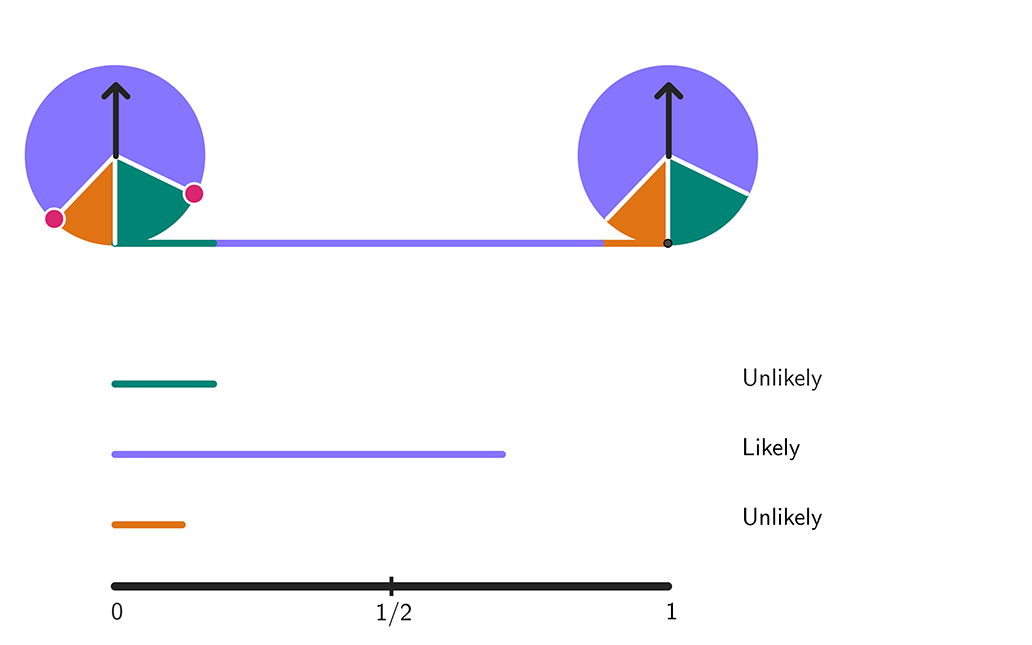
Certain, Likely, Unlikely, Impossible Events
Indicate the probability of a chance event with or without models as certain, impossible, more likely, less likely, or neither likely nor unlikely using benchmark probabilities of 0, 1/2, and 1.
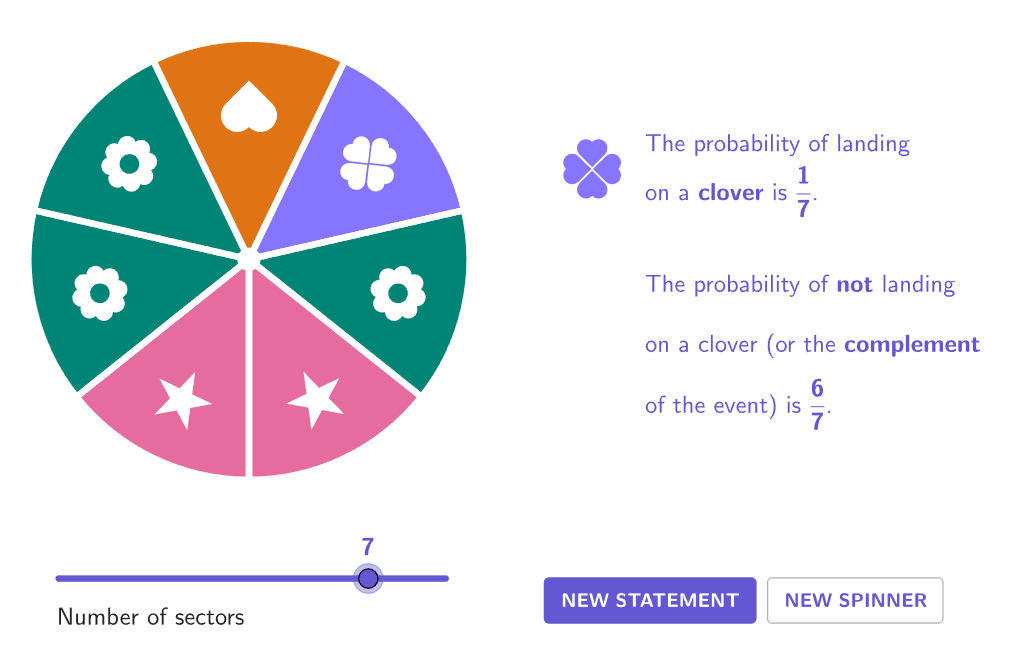
Complement of an Event
Determine the complement of an event.
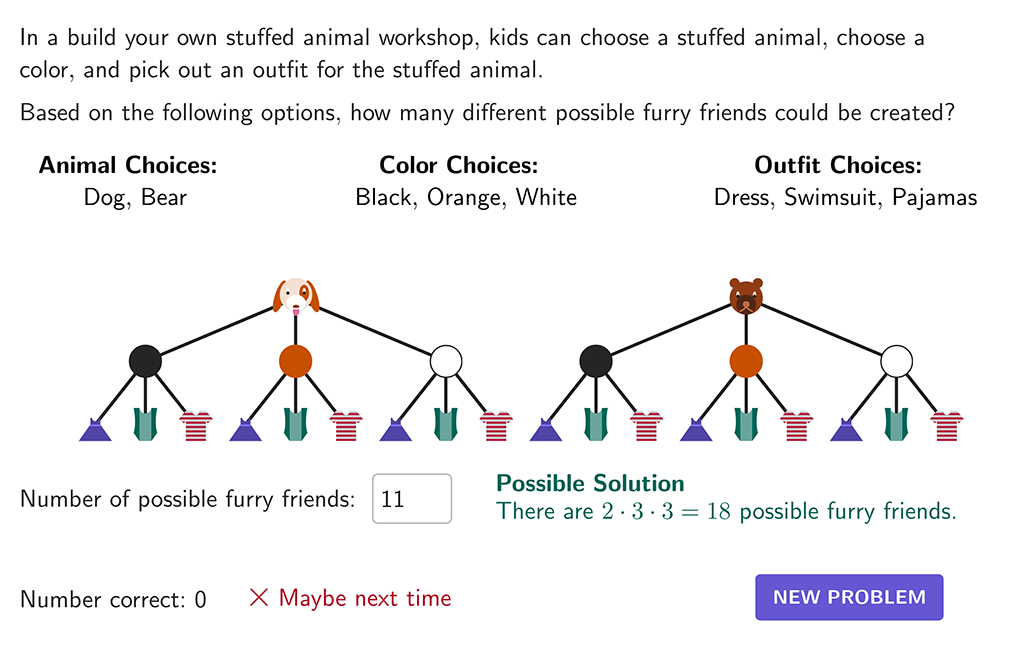
Counting Strategies for Sample Spaces
Determine the sample space for an event using counting strategies (include tree diagrams, permutations, combinations, and the fundamental counting principle).
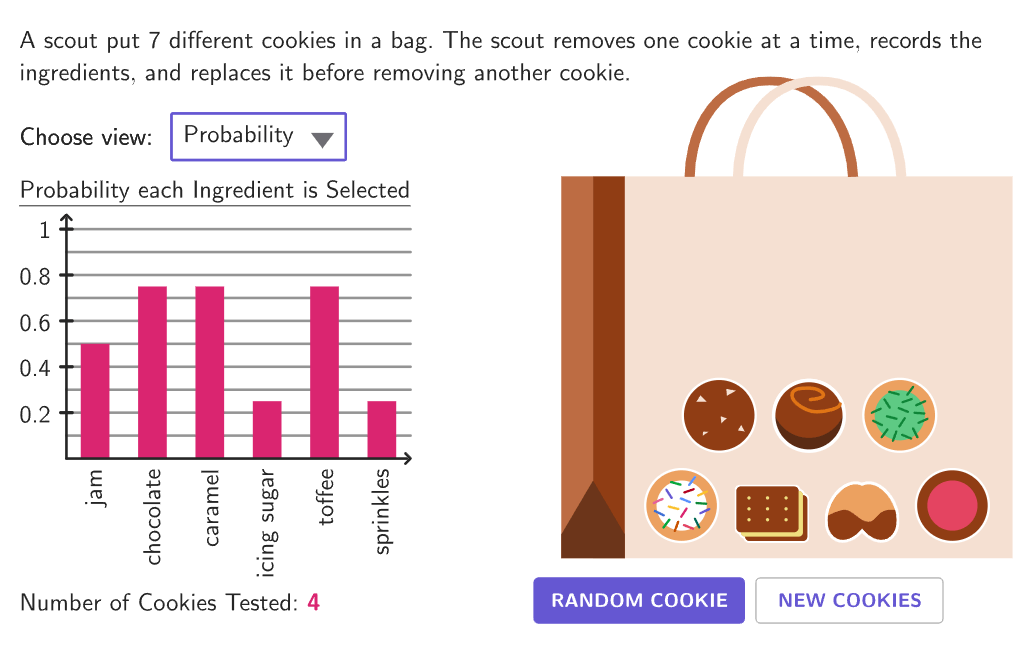
Frequency Tables, Line Plots and Bar Graphs
Interpret probability models for data from simulations or for experimental data presented in tables and graphs (frequency tables, line plots, bar graphs).
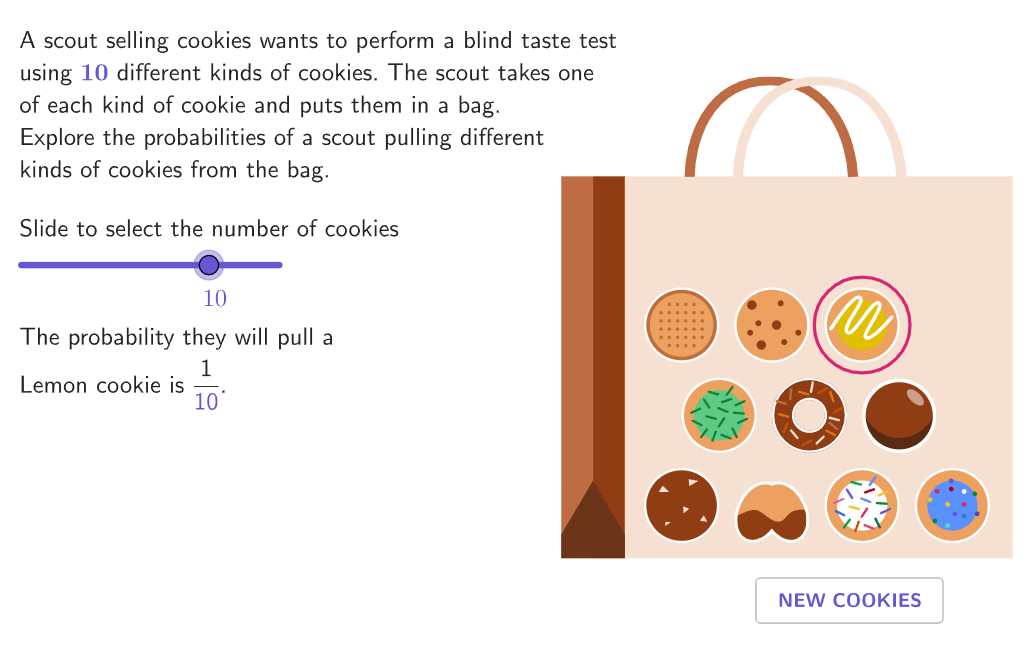
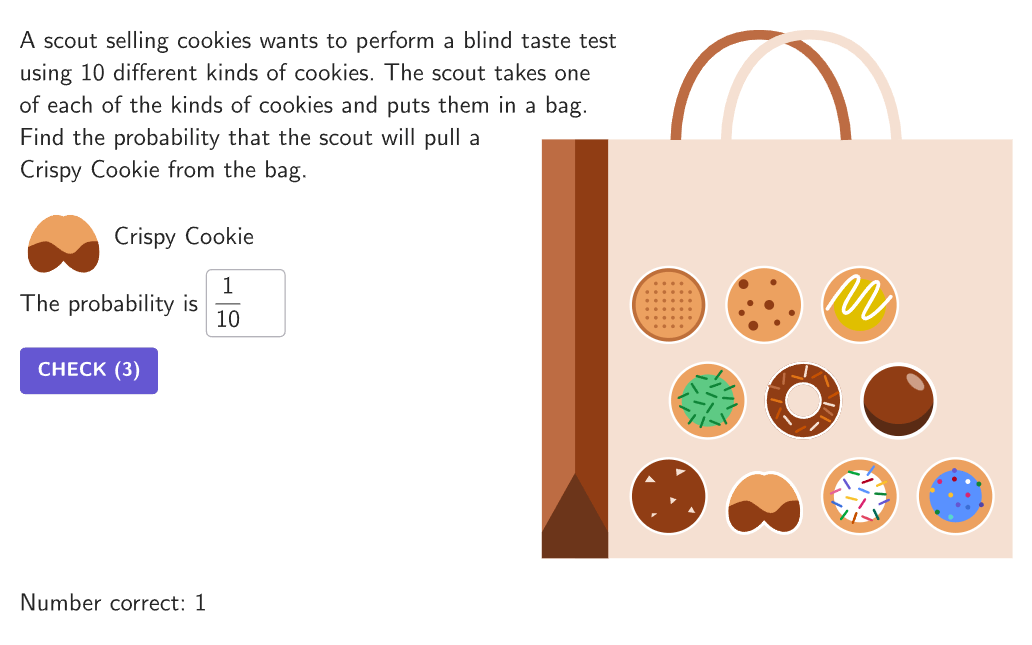
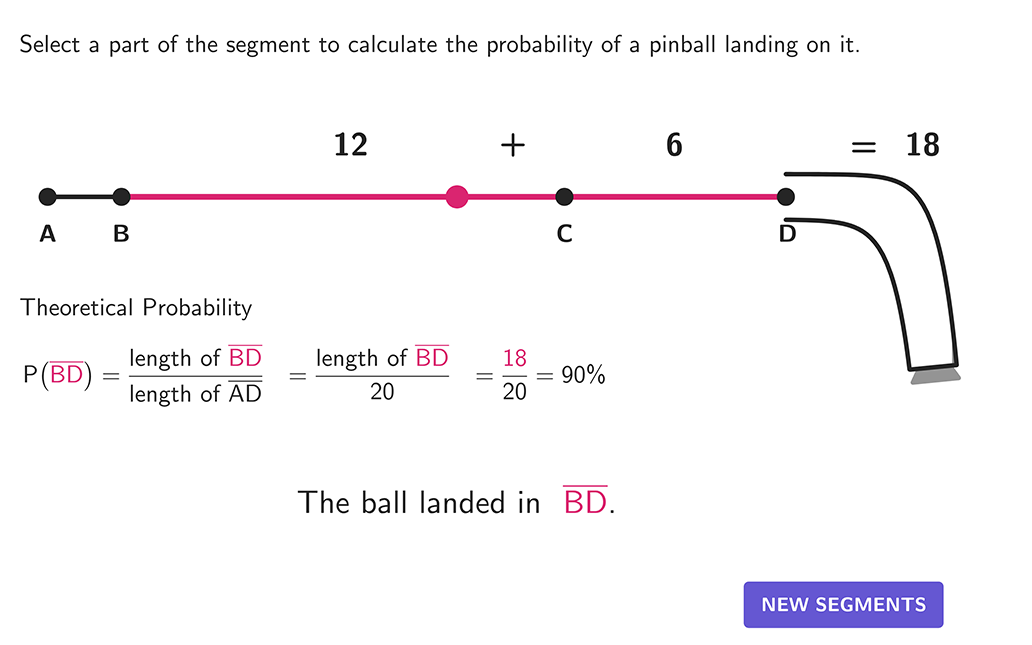
Probabilities in Geometry
Determine a simple probability using geometric figures.
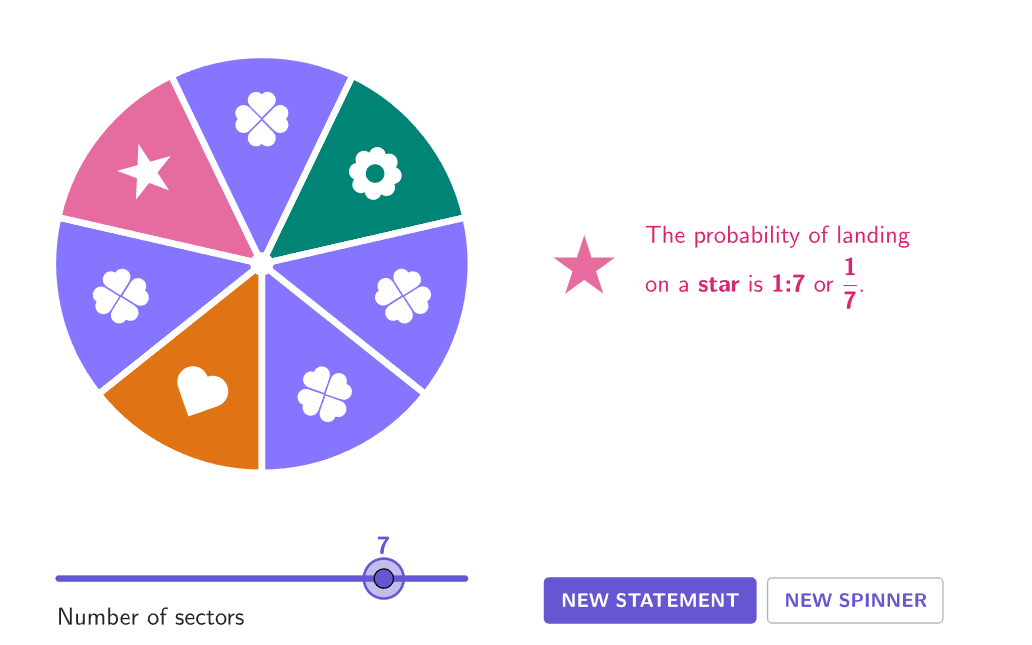
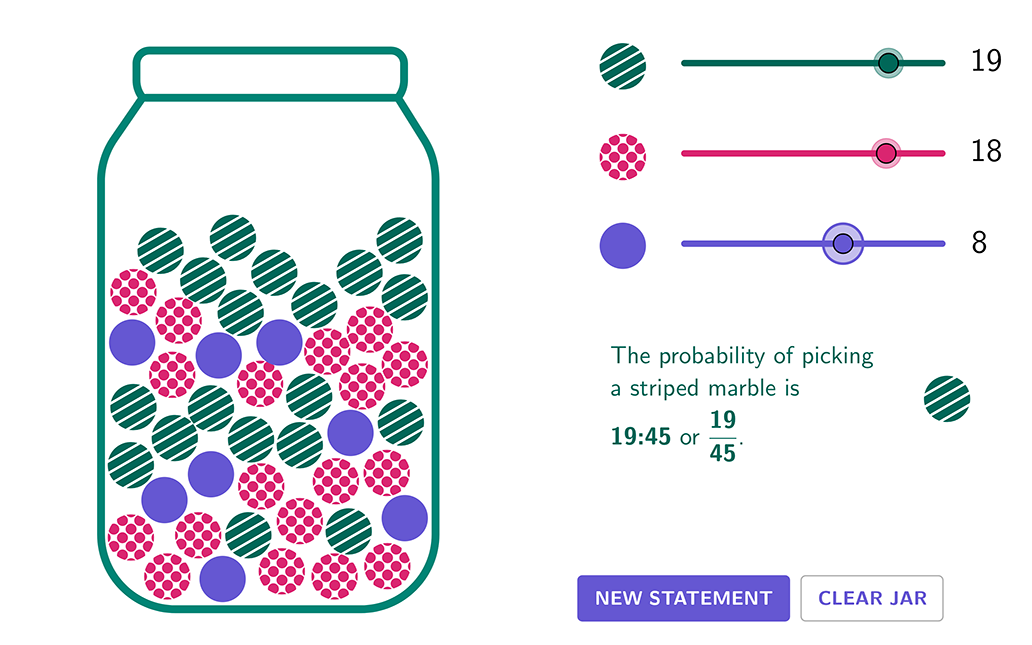
Probability of an Event as Fractions or Ratios
Describe the probability of a chance event using a fraction or ratio.
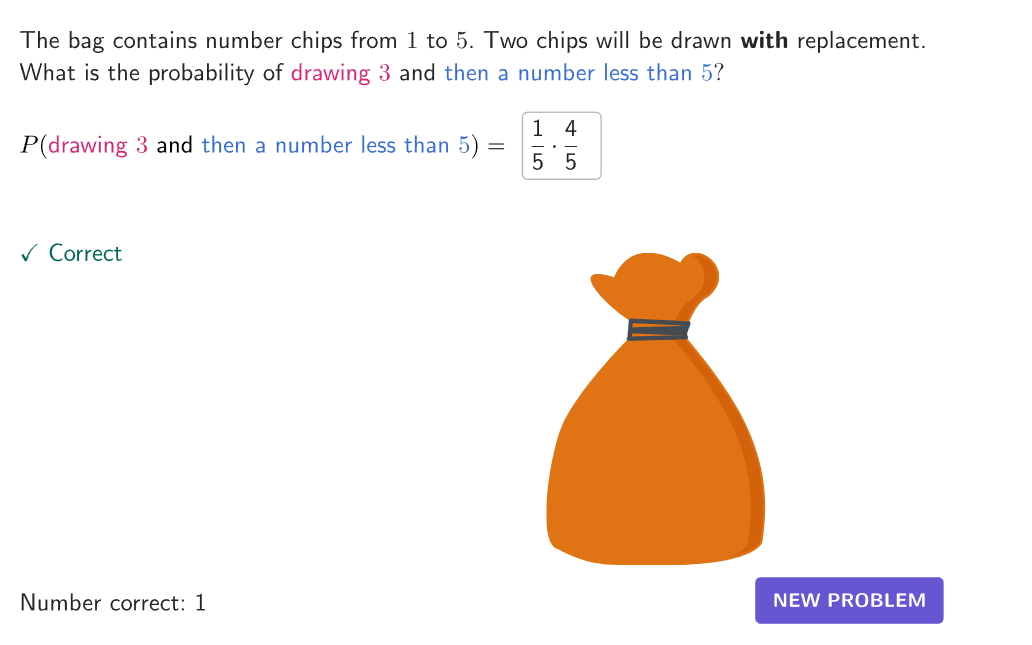
Probability of Compound Events
Determine the probability of compound events (with and without replacement).


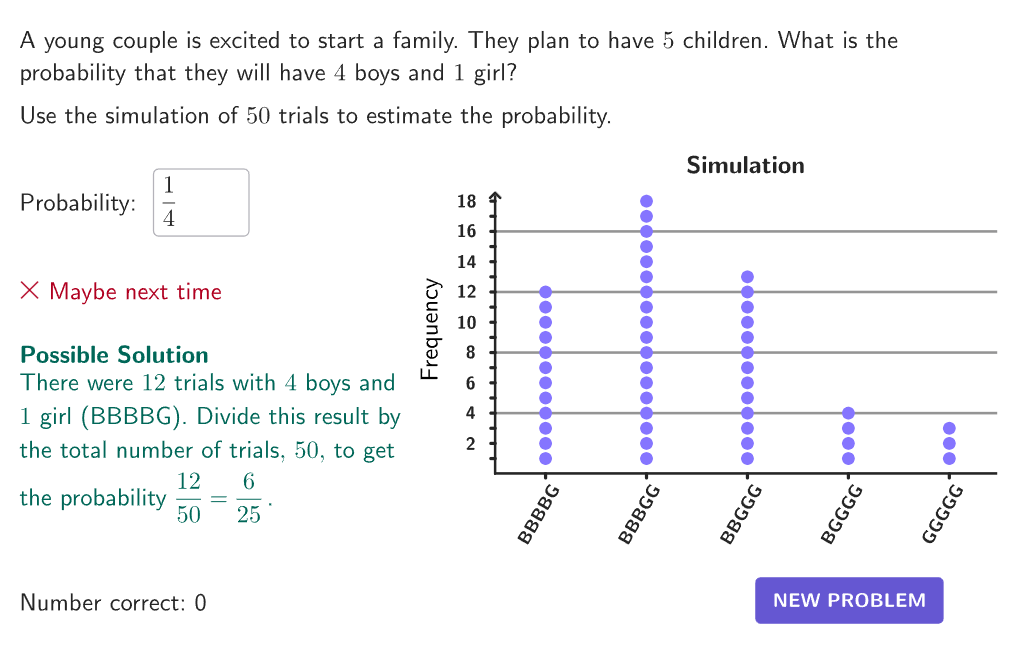
Simulations to Estimate Probabilities of Compound Events
Determine a simulation, such as random numbers, spinners, and coin tosses, to model frequencies for compound events.
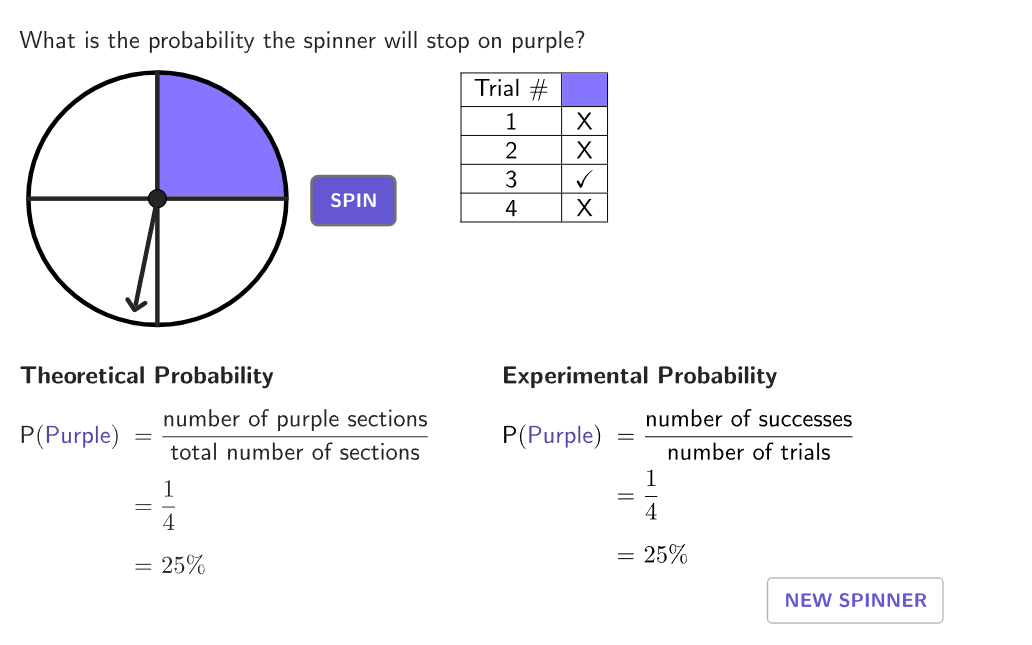
Theoretical vs. Experimental Probability
Determine the probability from experimental results or compare theoretical probabilities and experimental results.
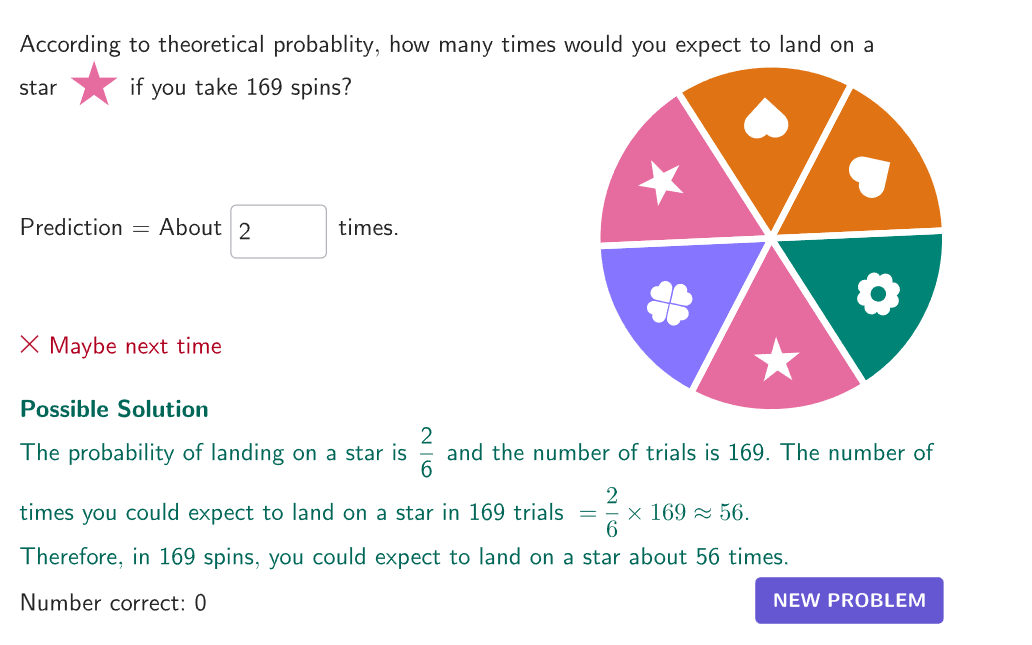
Using Theoretical and Experimental Probability to Make Predictions
Make predictions based on theoretical probabilities or experimental results.
High School
GRADES 9-12
Types of Events (Conditional, Mutually Exclusive, Independent, Dependent, etc.)
Distinguish between types of events (conditional, mutually exclusive, independent, dependent, etc.). Use the appropriate formula to determine probabilities of random phenomena using addition rule, multiplication rule, or Venn diagrams.


Argomenti correlati


Materiali della comunità
Esplora una collezione di più di un milione di attività, esercizi e lezioni per la matematica e le scienze, create con passione e attenzione dalla comunità globale di GeoGebra. Immergiti nelle infinite possibilità che ti aspettano.

Inizia a utilizzare GeoGebra ora
Crea un account gratuito che ti consentirà di salvare i tuoi progressi in tempo reale, oltre che garantirti l'accesso a migliaia di materiali per la matematica, che potrai personalizzare e condividere.