
Statistics
Learn and practice identifying statistical questions, measuring variability and making predictions from sample data with interactive resources from GeoGebra.
Middle School
GRADES 6-8
Comparing Data Distributions
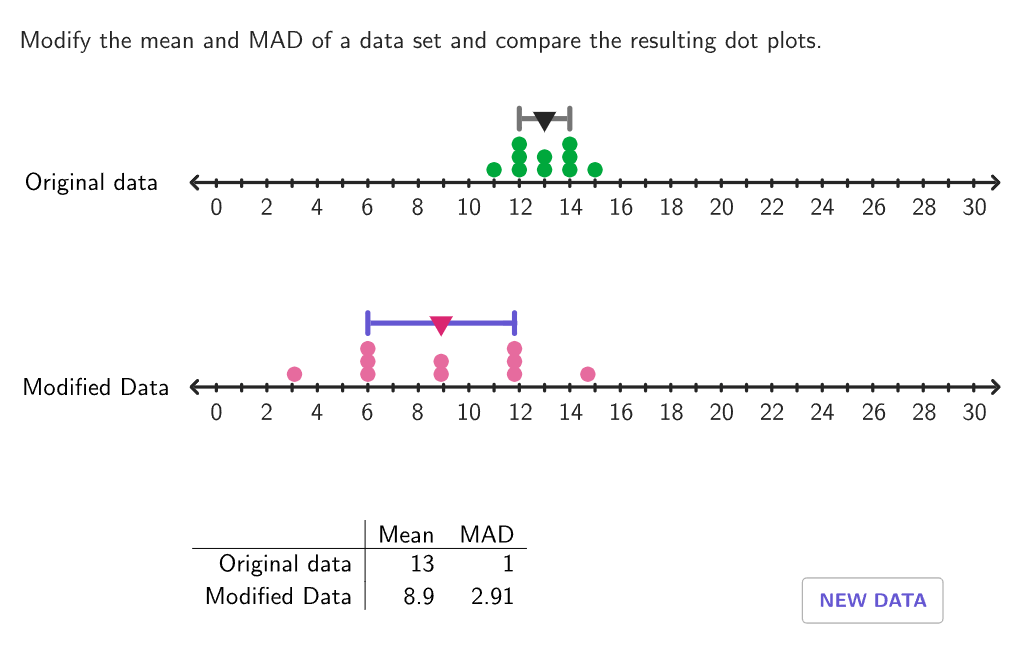
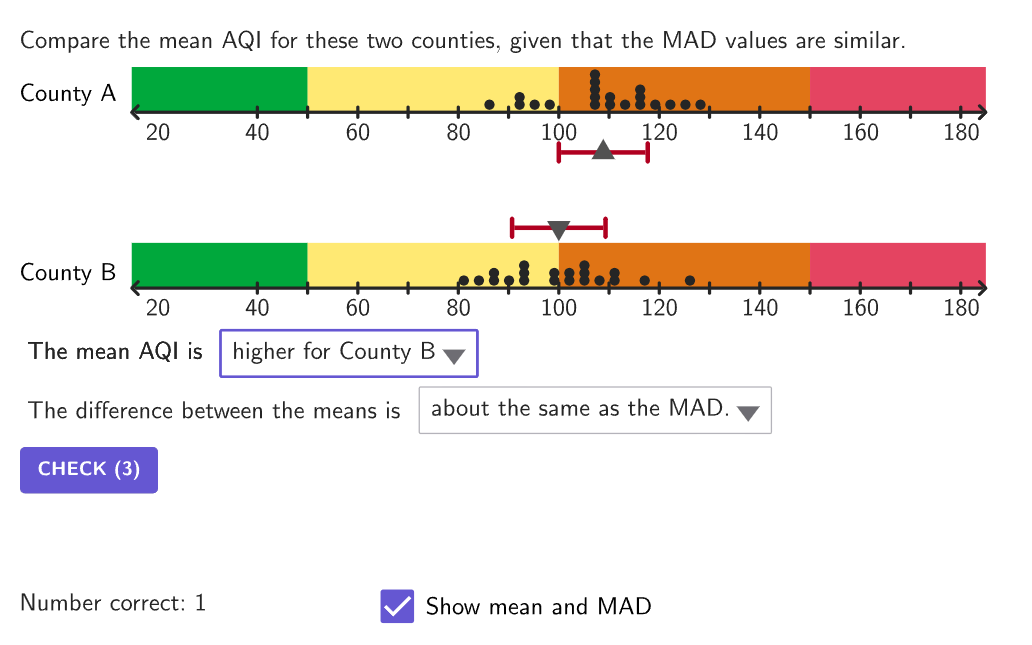
Compare data and distributions of data, numerical and contextual, to draw conclusions, considering the measures of center and measures of variability.
Identifying Statistical Questions
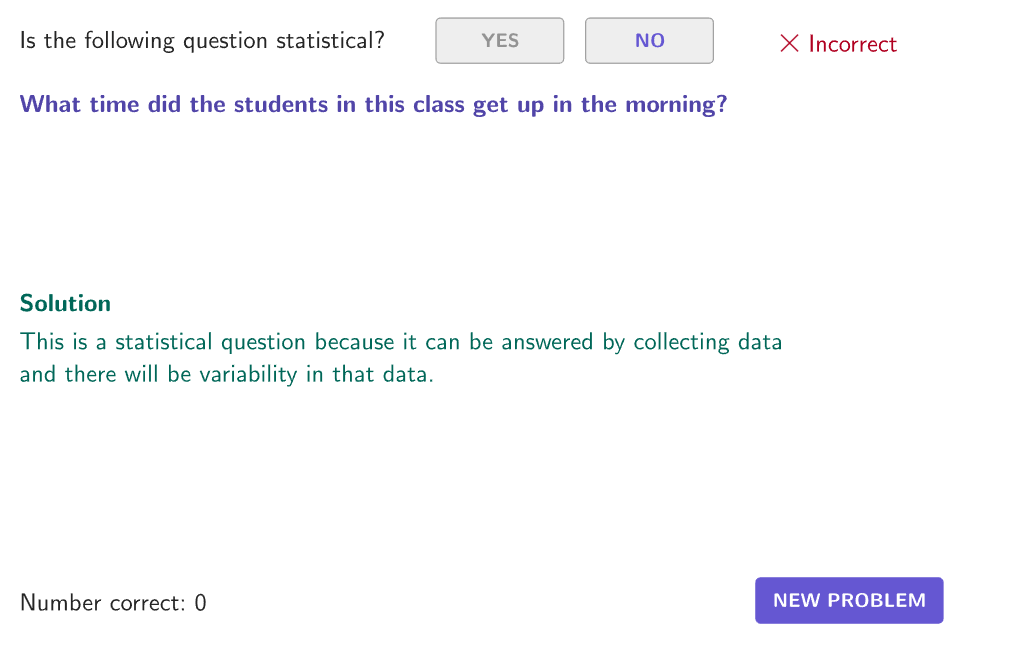
Recognize that a statistical question is one that will require gathering data that has variability.
Inferences From Samples
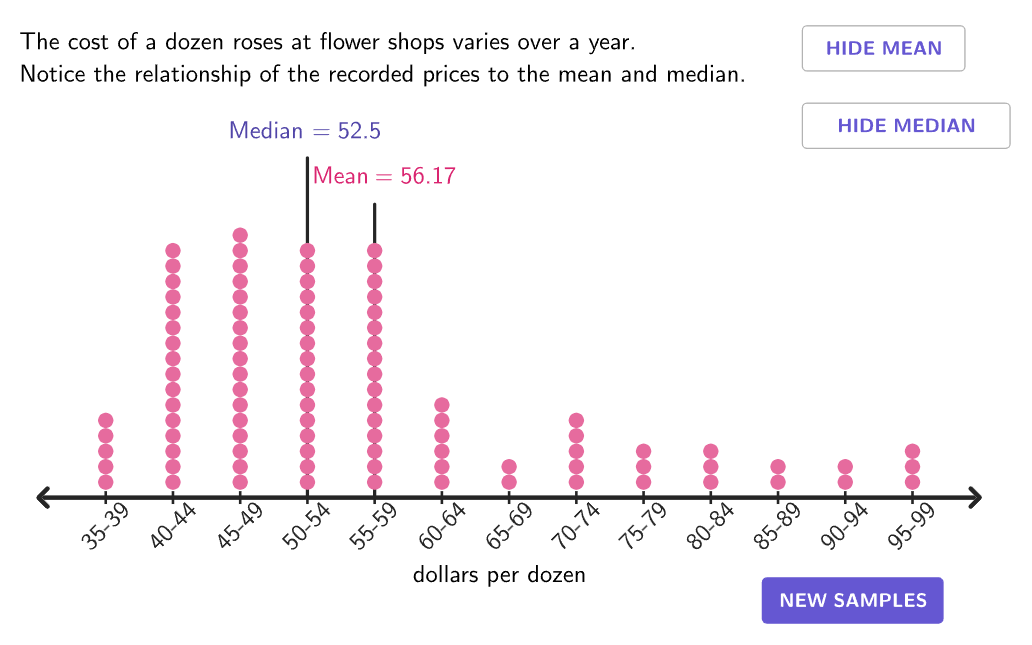
Make inferences about a population based on a sample and compare variation in multiple samples.
Linear and Nonlinear Relationships in Data Sets
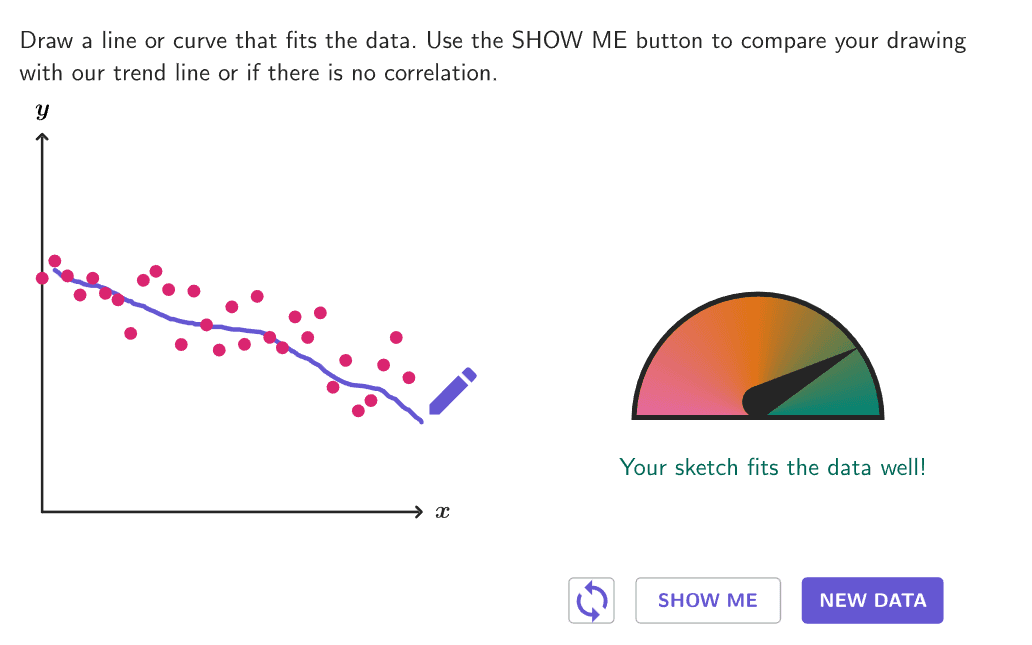
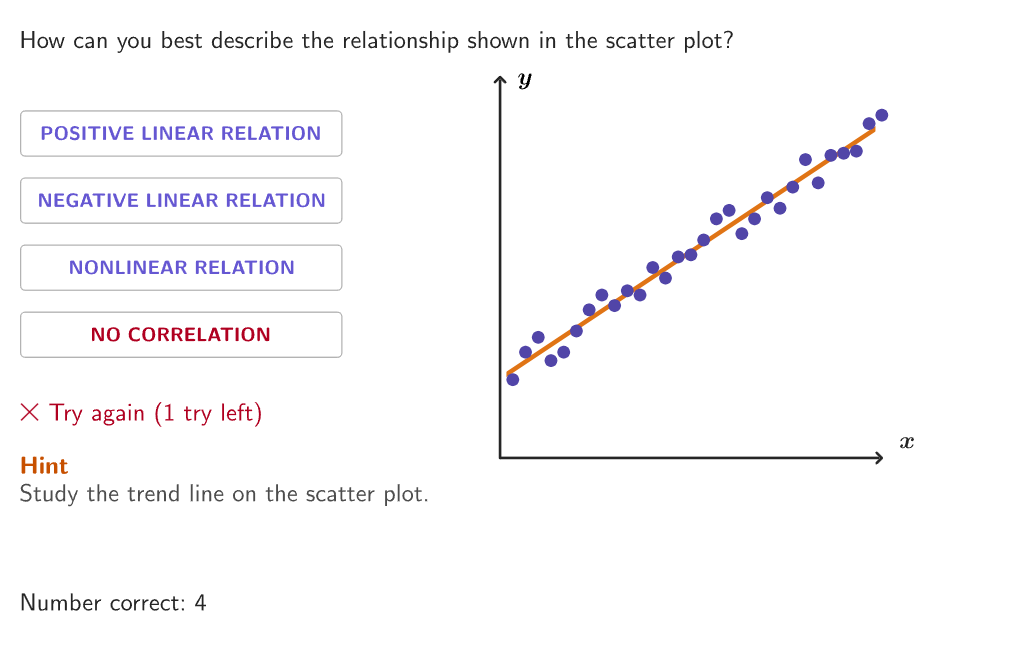
Identify linear and nonlinear relationships in data sets.
Measures of Variability
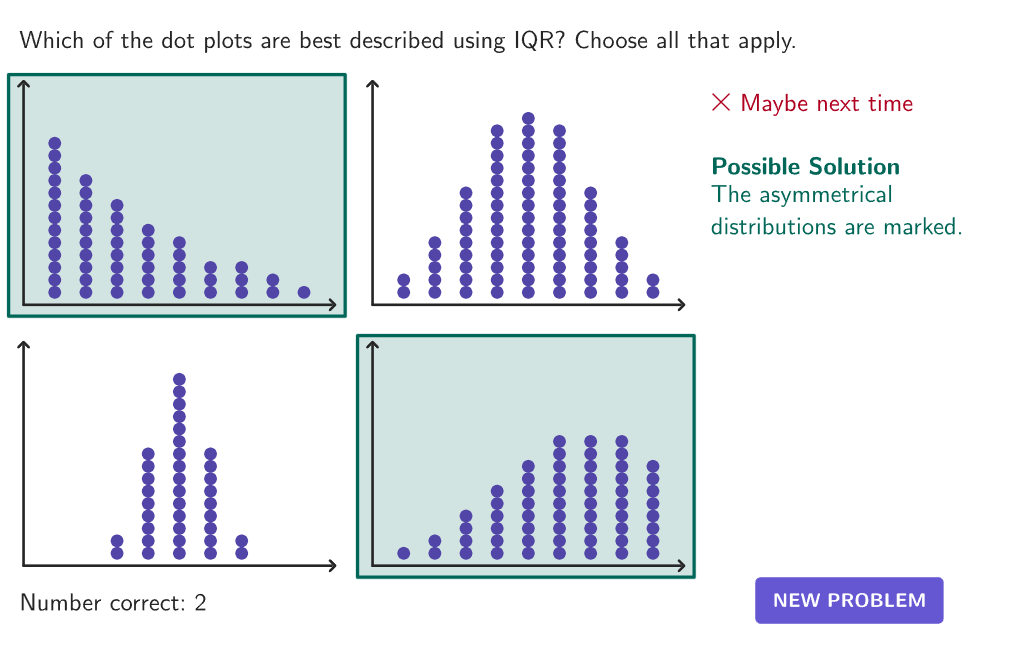
Select the appropriate measure of variability; choose a measure of variability based on the presence of outliers, clusters, and the shape of the data distribution.
Observation, Measurement, and Sampling
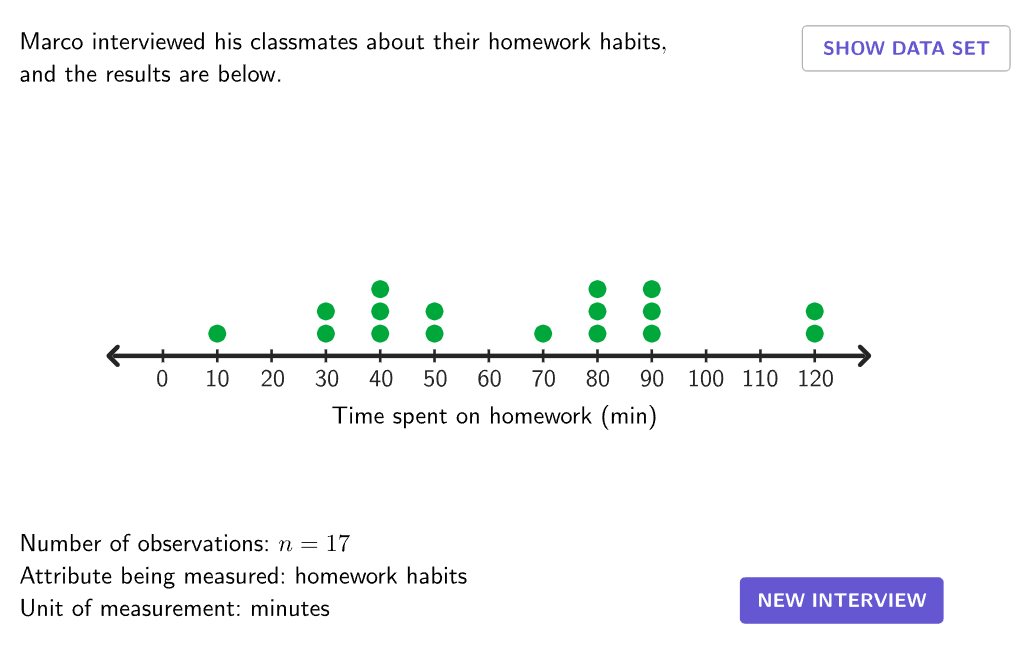
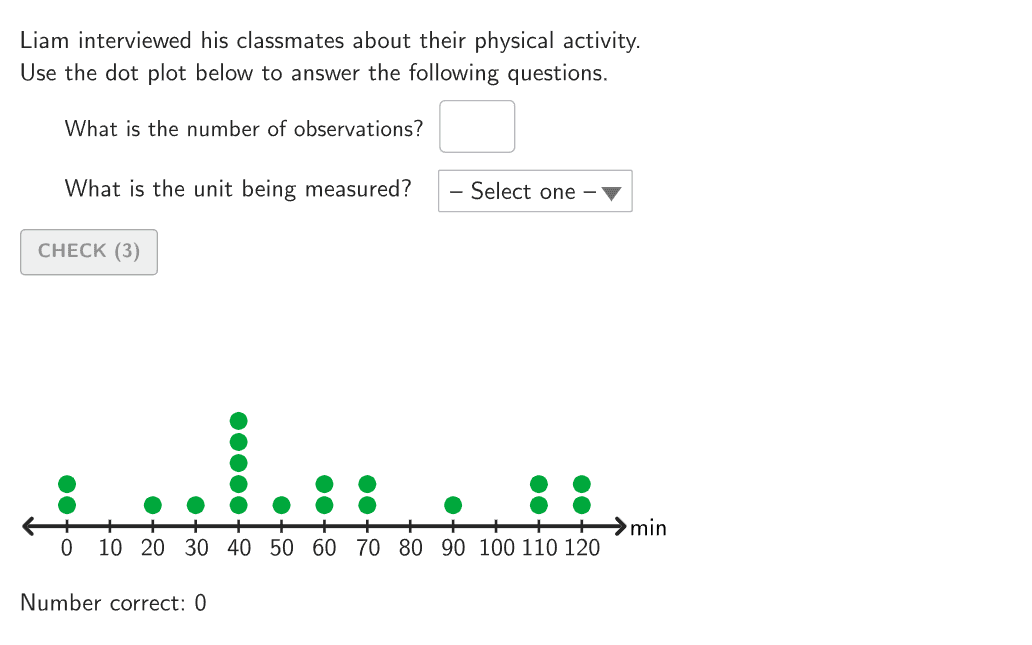
Describe a data set by its number of observations, what is being measured, and the units of measurement.
Population vs. Sample
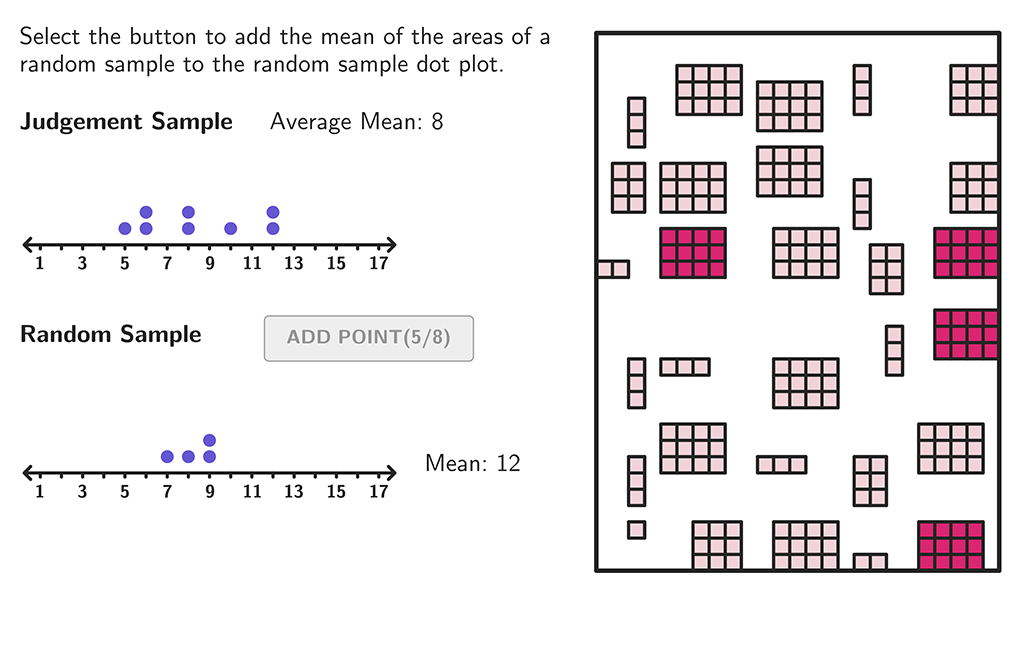
Distinguish between a population and a sample and draw conclusions about the sample (random or biased).
Predictions From Samples
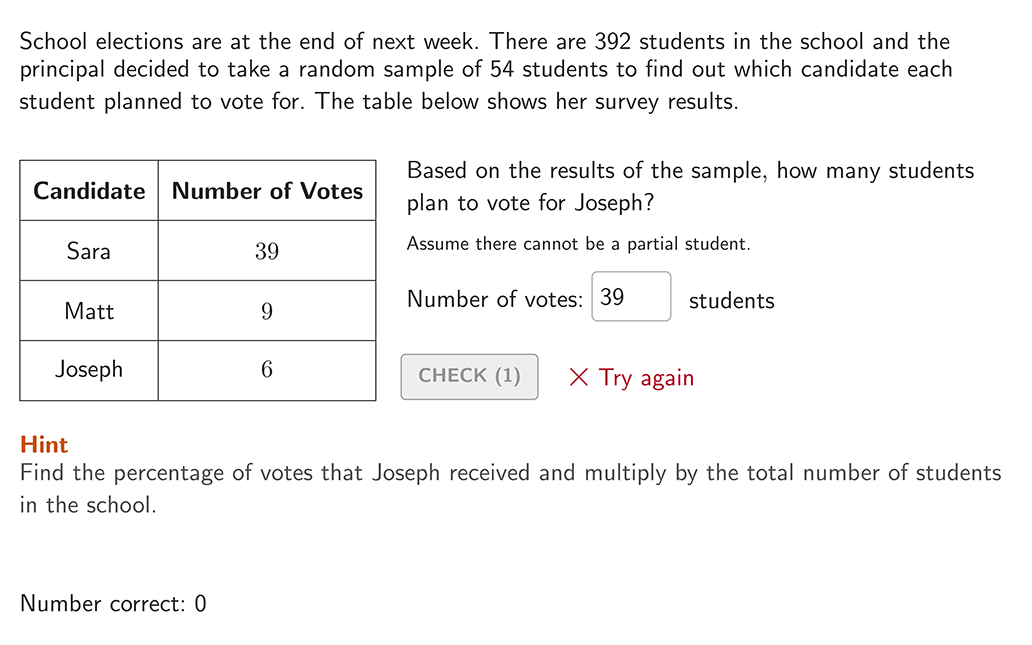
Make predictions based on results from surveys and samples.
Quartiles and Interquartile Range of Data
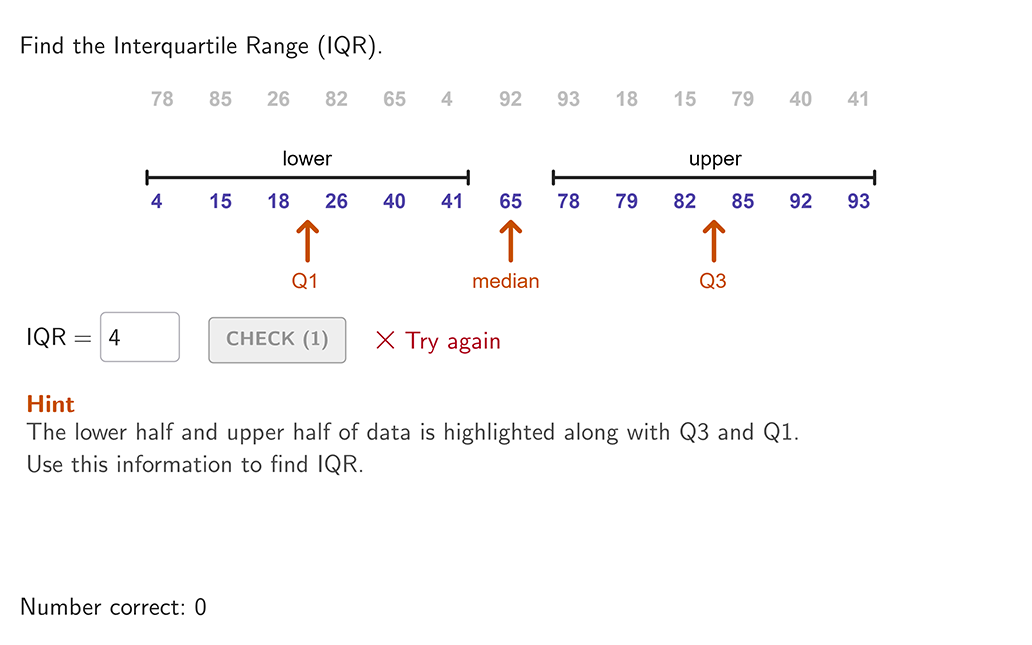
Determine the quartiles or interquartile range for a set of data.
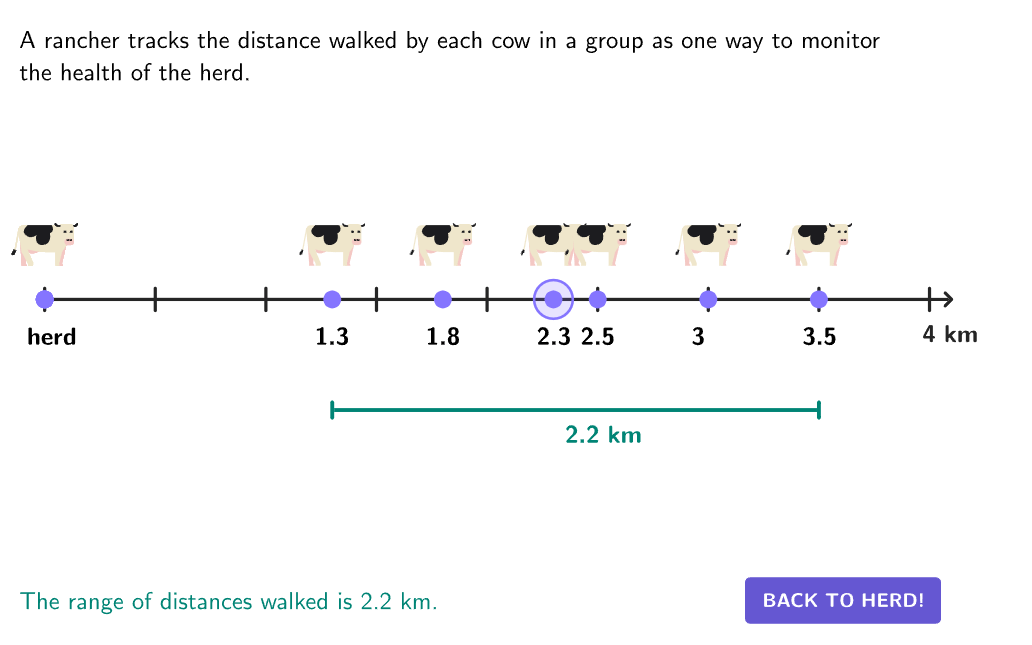
Set Theory
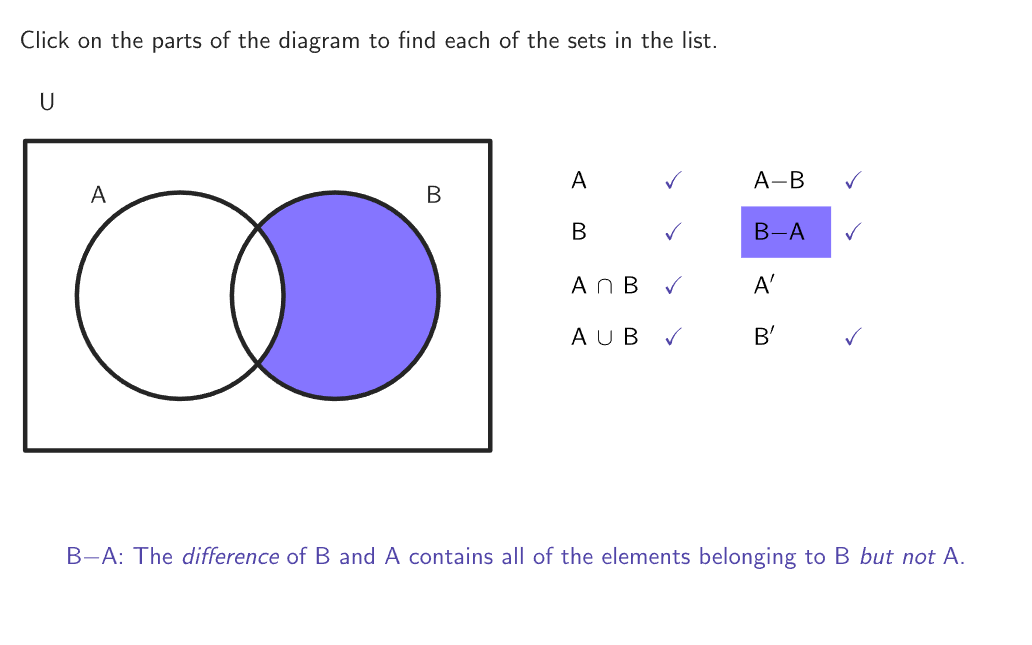
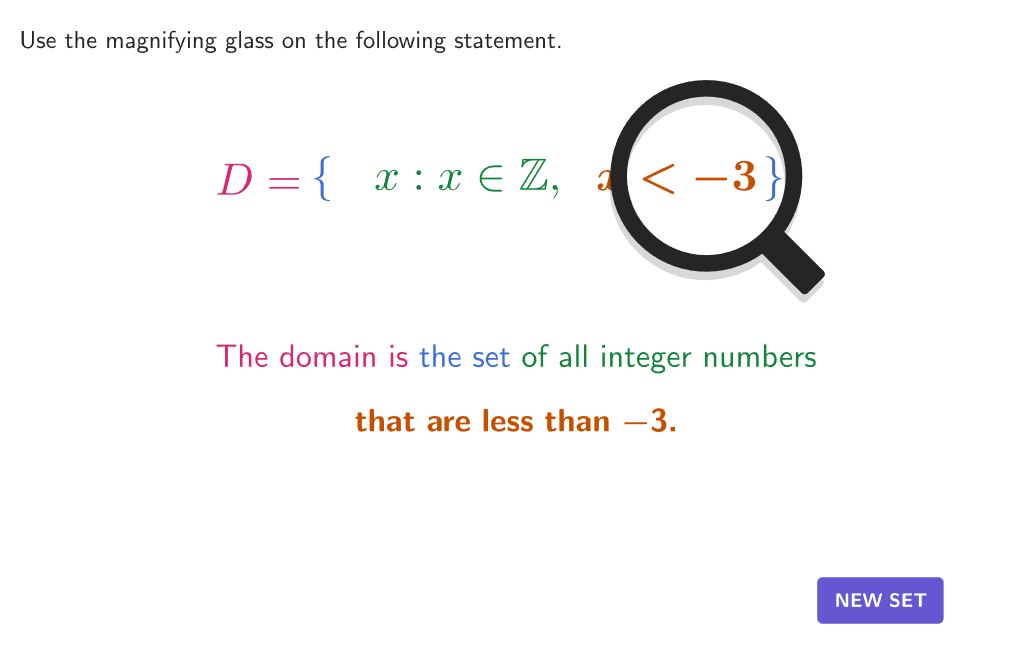
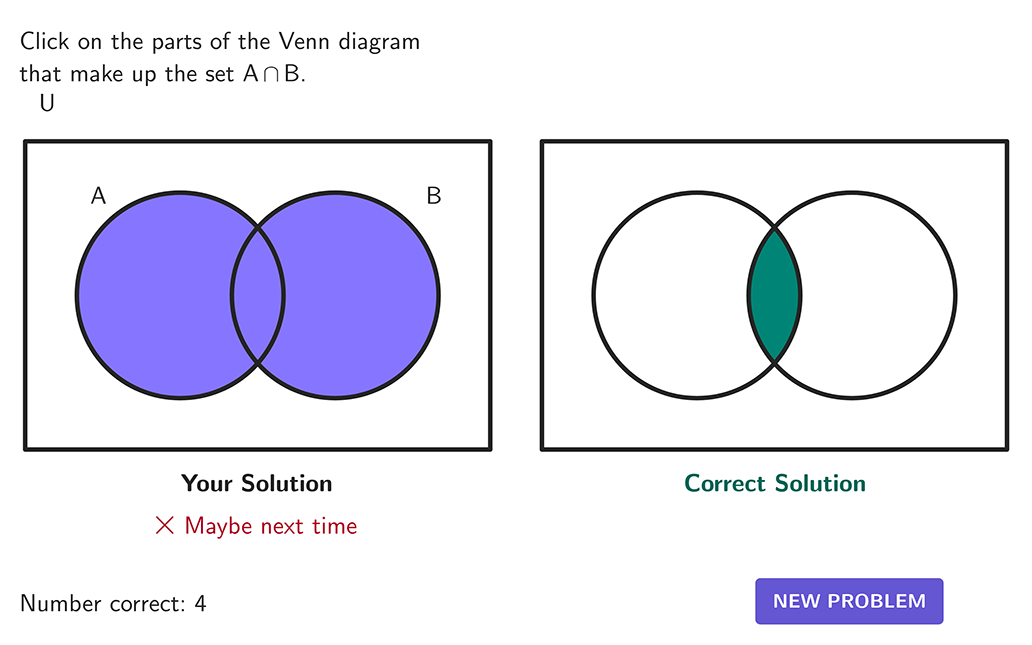
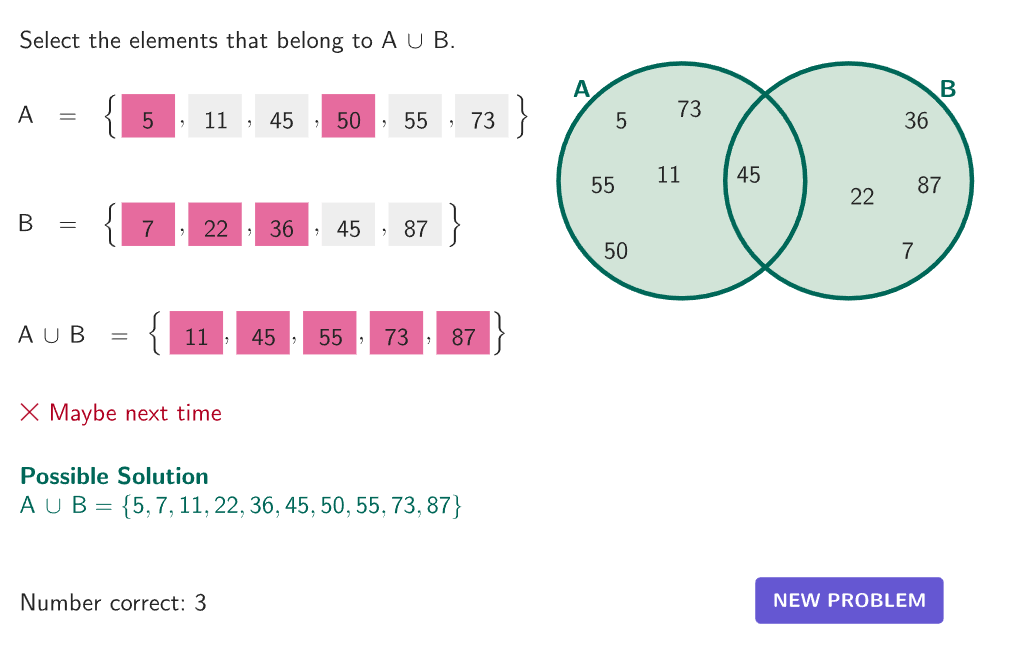
Use set notation to describe domains, ranges, intersection, and union of sets. Identify cardinality of sets, equivalent sets, disjoint sets, complement, or subsets.
Two-way tables
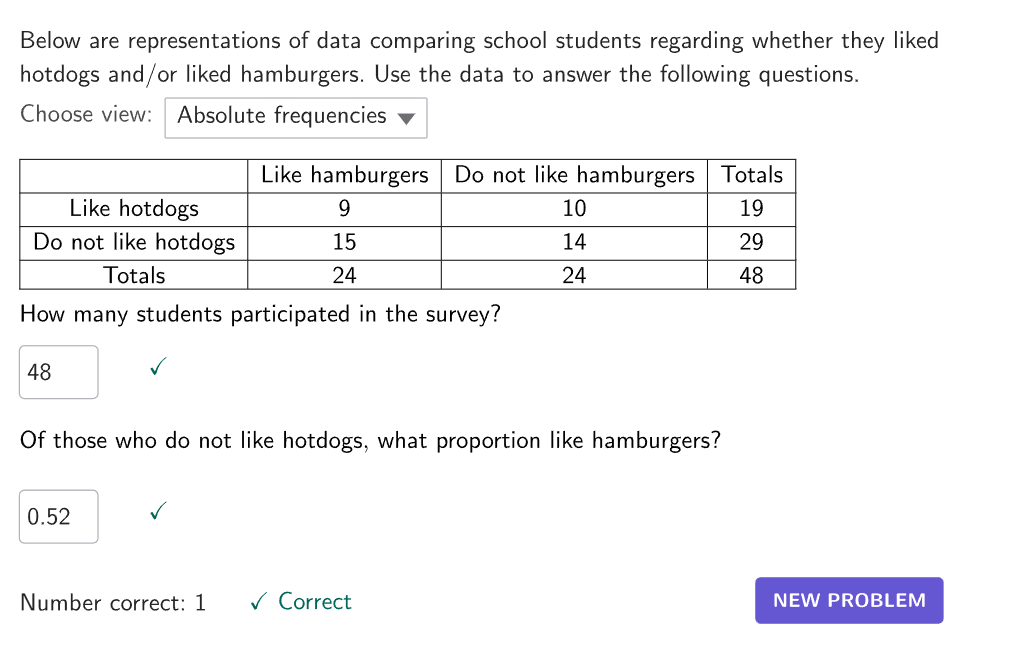
Construct and interpret a two-way table to display two categories of data from the same source.
High School
GRADES 9-12
Correlation Coefficient, Correlation and Causation- Differences, Design and Examples
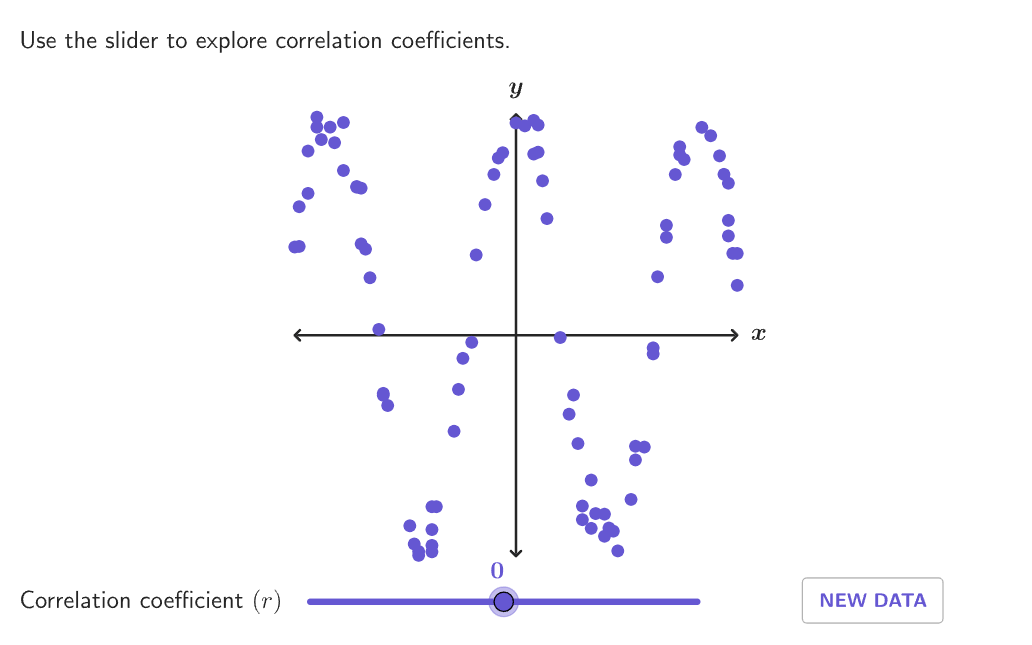
Use models to make predictions and interpret the correlation coefficient of the model; distinguish between correlation and causation.
Lines of Best Fit
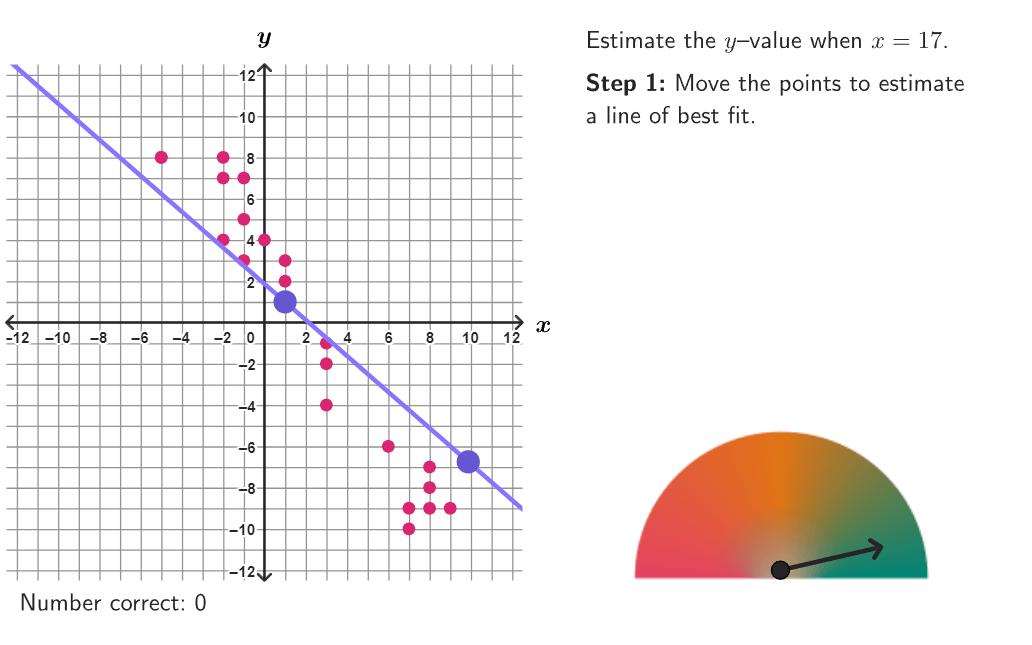
Derive a linear equation that models a set of data (line of best fit) using calculators. Use the model to make predictions.
Povezane teme


Uradci zajednice
Istražite bogatu kolekciju od preko milijun matematičkih i znanstvenih aktivnosti, vježbi i lekcija koji je studiozno izradila zajednica korisnika. Uronite u beskonačni mogućnosti koje Vas čekaju.

Započnite s korištenjem GeoGebre danas
Izradite besplatan račun kako biste mogli spremiti svoj napredan u svakom trenutku i pristupiti tisućama uradaka koje možete prilagoditi svojim potrebama i potrebama svojih učenika i podijeliti dalje s drugima