3. Explanatory images for the Tutorial Applet Based on the Half-Wave Zone Model: Visualizing Near-Field Single-Slit Diffraction

Explanatory images for the Tutorial Applet Based on the Half-Wave Zone Model: Visualizing Near-Field Single-Slit Diffraction
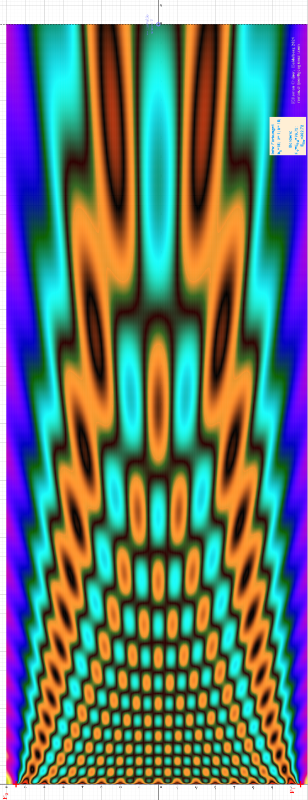
[size=85][b]Fig. 1. Case of a Vertically oriented near-field Heatmap for diffraction by a Single Slit:
[/b] b=15, λ=1 yo=40, xo=8, Coloring:   c=4  [/size]
Fig. 1. Case of a Vertically oriented near-field Heatmap for diffraction by a Single Slit: b=15, λ=1 yo=40, xo=8, Coloring: c=4
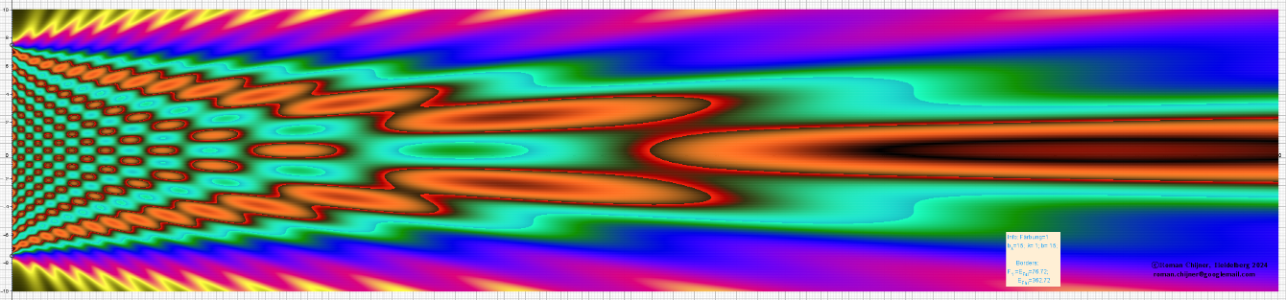
[size=85][b][b]Fig. 2. [/b]Case of a Horizontally oriented near-field Heatmap for diffraction by a Single Slit:  [/b]
  b=15, λ=1 xo=90, yo=10, Coloring:   c=1 [/size]
Fig. 2. Case of a Horizontally oriented near-field Heatmap for diffraction by a Single Slit: b=15, λ=1 xo=90, yo=10, Coloring: c=1
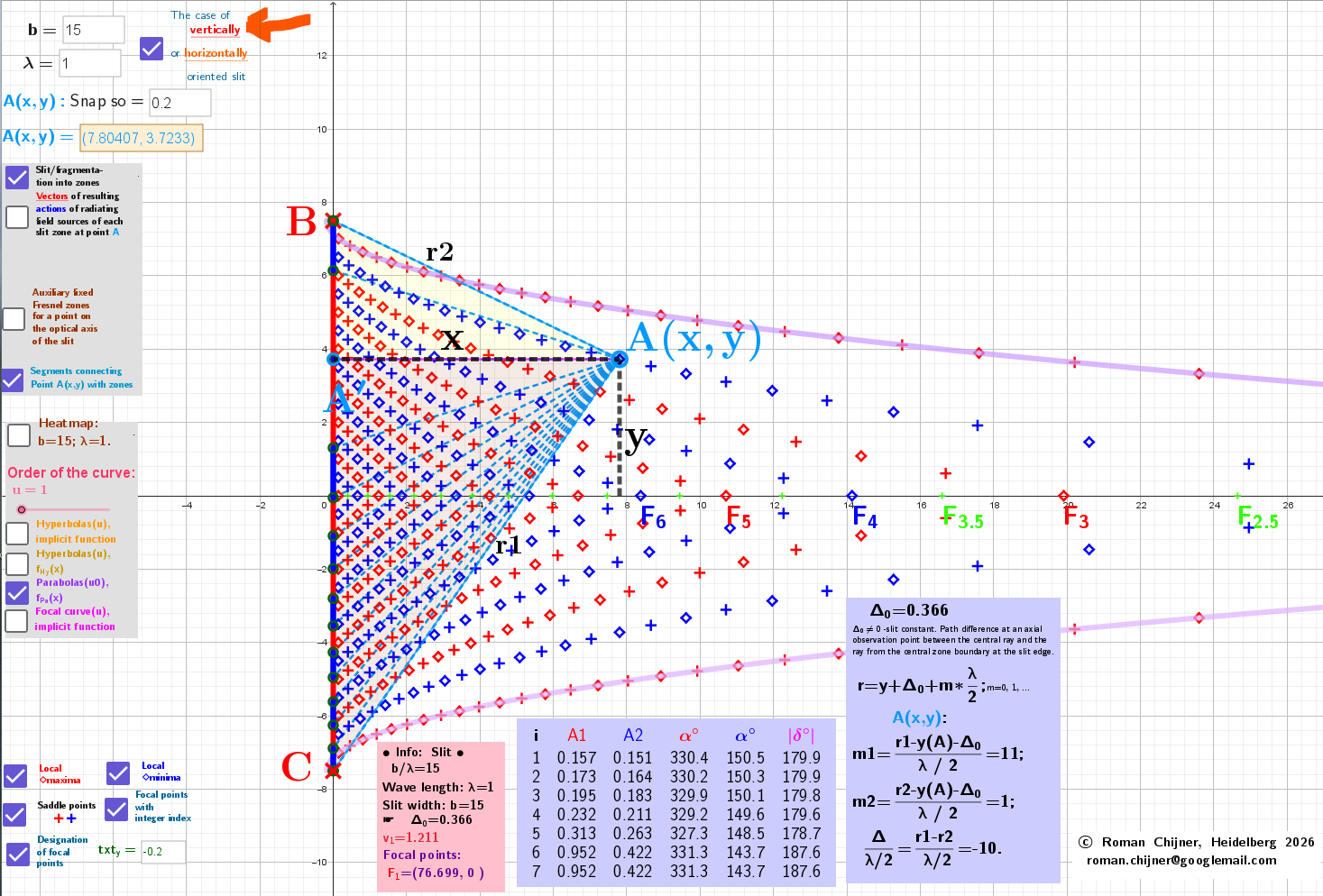
[size=85] [b]Fig. 3. [/b] Resultant phasors and amplitudes for half-period zones at point[b][color=#1e84cc] A(x, y)[/color][/b], calculated using the Kirchhoff diffraction integral for a Vertically Oriented Near‑Field [b]Heatmap[/b] , with zone dimensions determined according to the proposed model.[/size]
Fig. 3. Resultant phasors and amplitudes for half-period zones at point A(x, y), calculated using the Kirchhoff diffraction integral for a Vertically Oriented Near‑Field Heatmap , with zone dimensions determined according to the proposed model.
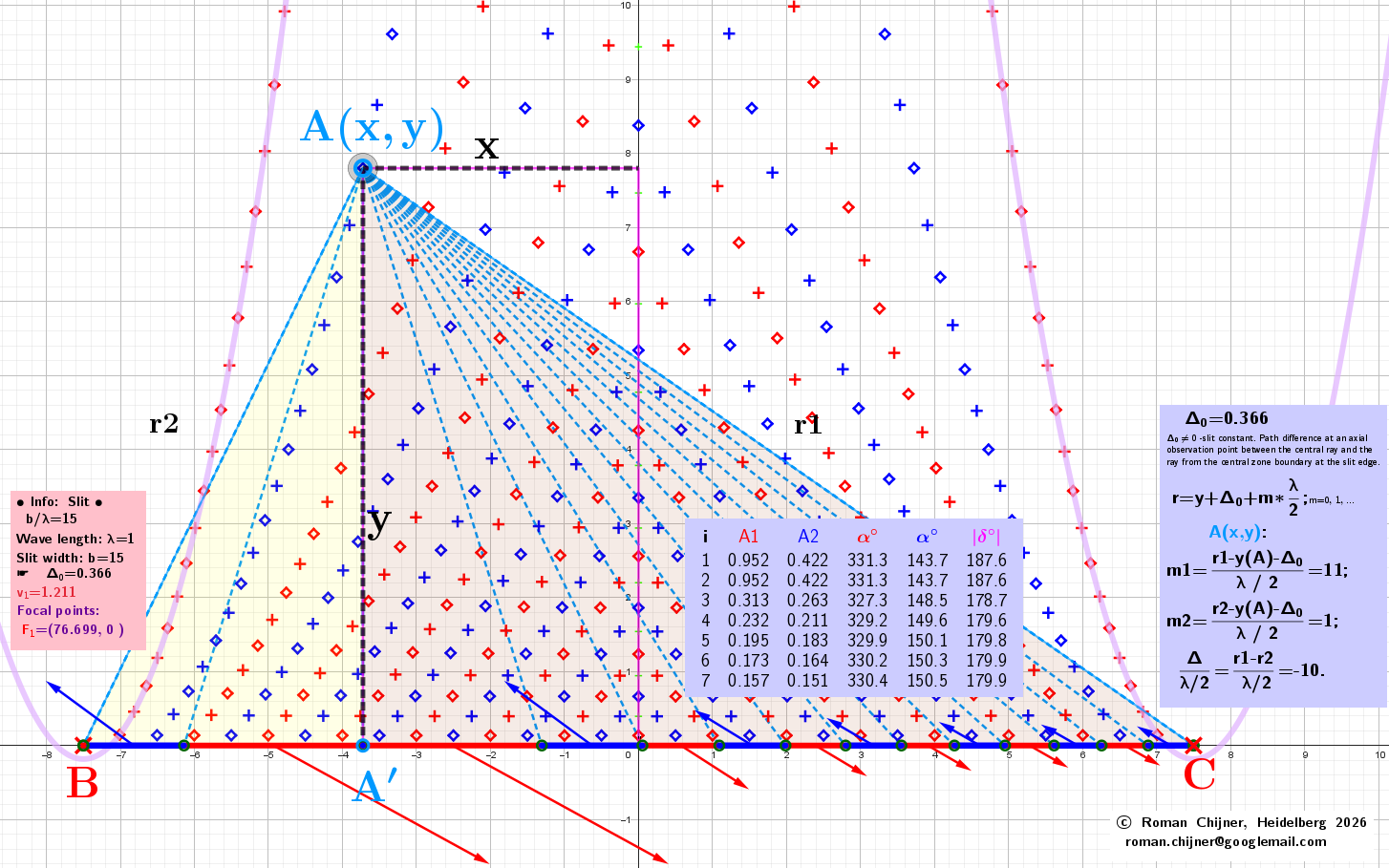
[size=85] [b][b]Fig. 4.[/b] [/b]Resultant phasors and amplitudes for half-period zones at point [b][color=#1e84cc]A(x, y)[/color][/b], calculated using the Kirchhoff diffraction integral for a [i]Vertically Oriented Near‑Field [b]Heatmap[/b][/i], with zone dimensions determined according to the proposed model.  [/size]
Fig. 4. Resultant phasors and amplitudes for half-period zones at point A(x, y), calculated using the Kirchhoff diffraction integral for a Vertically Oriented Near‑Field Heatmap, with zone dimensions determined according to the proposed model.
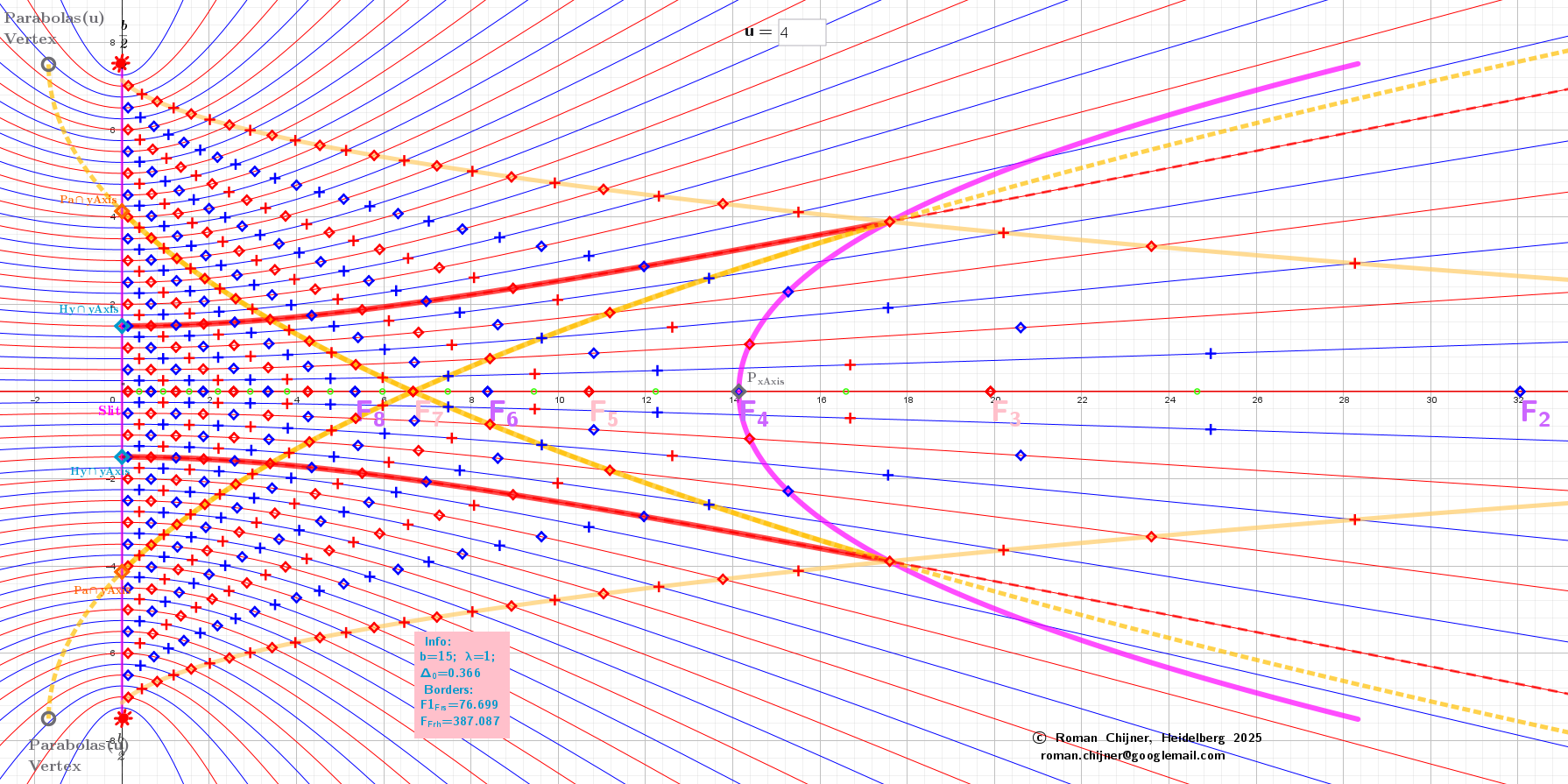
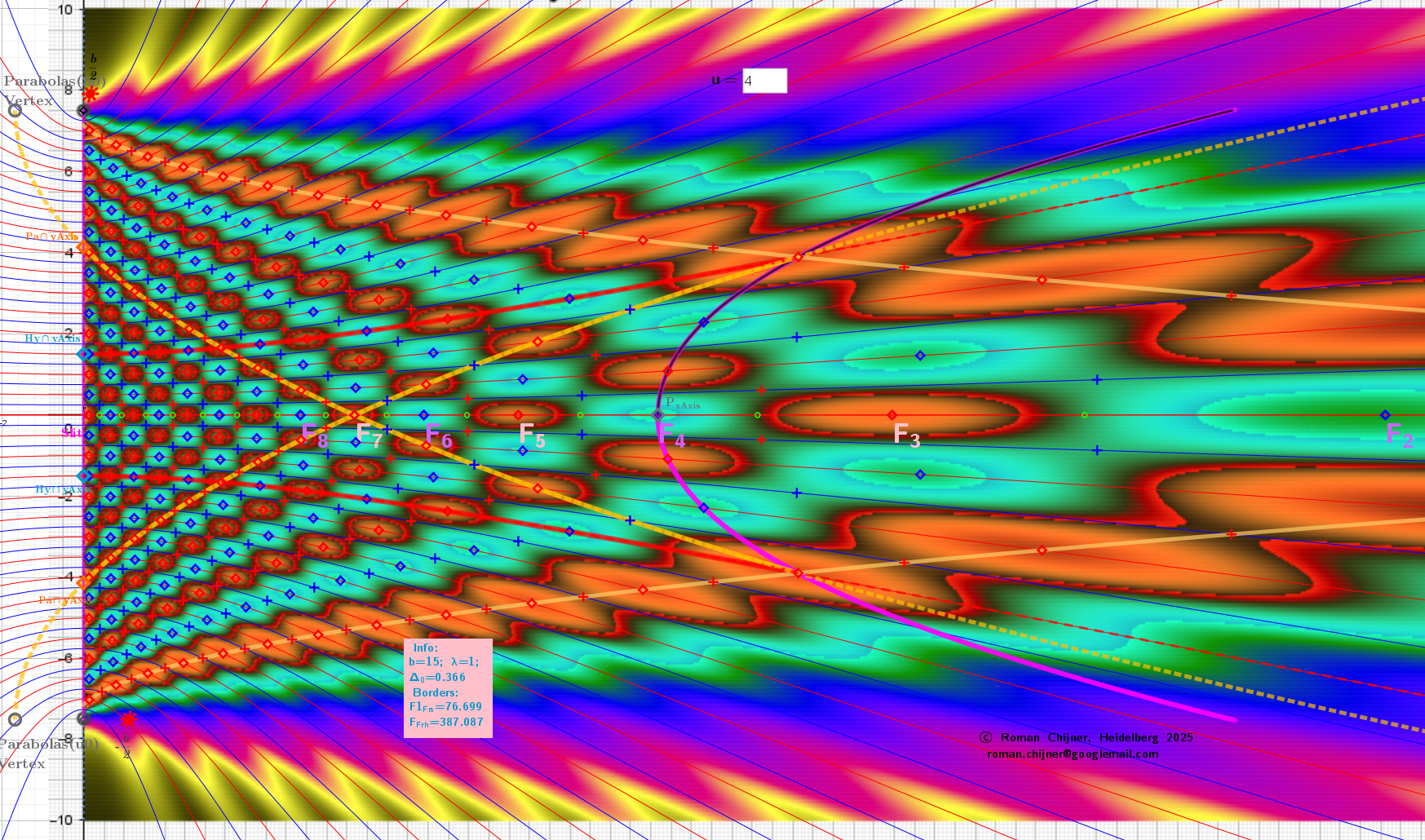
[size=85][b] Fig. 5. [/b]Three distinct classes of extremal point trajectories, represented by [color=#ff0000]hyperbolic-[/color][color=#0000ff] hyperbolic[/color], [color=#bf9000]parabolic[/color], and [color=#ff00ff]focal[/color] implicit curves. 
  Hyperbolic curves are, as it were, curves of [b][i][color=#ff0000]constructive[/color][/i][/b] and [b][i][color=#0000ff]destructive[/color][/i][/b] interference of 2 sources ([b][color=#ff0000]☀[/color][/b])  located at the ends of the slit.[/size]
Fig. 5. Three distinct classes of extremal point trajectories, represented by hyperbolic- hyperbolic, parabolic, and focal implicit curves. Hyperbolic curves are, as it were, curves of constructive and destructive interference of 2 sources (☀) located at the ends of the slit.
[size=85] [b]Fig. 6[/b]. Previous figure with a [b]Heatmap[/b] of the diffraction field superimposed.[/size]
Fig. 6. Previous figure with a Heatmap of the diffraction field superimposed.
Image